
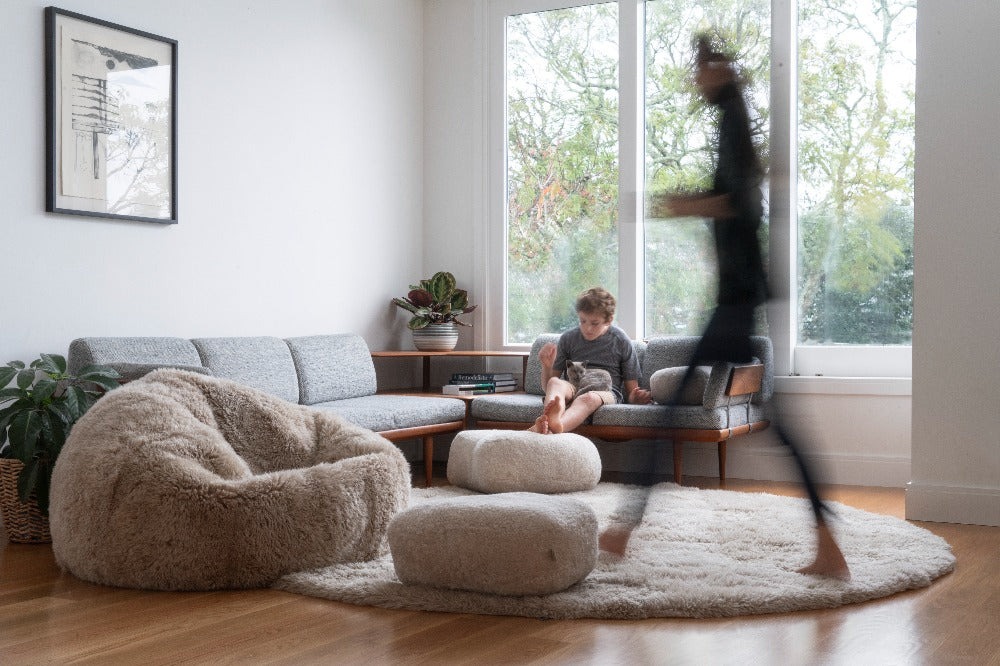
If a home feels cramped or confusing, the issue often comes down to one thing: too many straight lines. Many spaces, especially in modern apartments or smaller homes, are dominated by hard, straight angles—the edges of the walls, the corners of the furniture, and the rectangular shape of traditional rugs. This visual rigidity can make a room feel boxy, rigid, and much smaller than it truly is.
The simple, unexpected design solution is the round rug. By introducing a soft, circular element into a highly structured space, a round rug actively breaks the visual “grid.” This curve provides an immediate contrast that draws the eye, softens the overall look of the room, and begins to trick the mind into seeing a more open, fluid area. It is not just an aesthetic choice, but a functional tool for manipulating visual perception in compact or irregularly shaped rooms.
This report explains the hidden visual psychology behind using curves in decor, details why natural fibers like jute are the perfect material complement for spatial illusion, and provides critical, practical sizing advice to ensure a round rug successfully maximizes any small or awkward space in the home.
The Secret Design Weapon: Breaking the Visual Grid
The effectiveness of a round rug lies in its ability to influence the way the human brain processes space. When designing a small room, the goal is often psychological decompression—making the space feel less contained.
Softening Sharp Angles and Creating Flow
From a design psychology perspective, curved shapes are naturally more calming and are associated with comfort and relaxation. Straight lines and sharp angles, by contrast, can suggest formality, intensity, or constraint. In a small living room filled with angular sofas and cabinet edges, the addition of a circle introduces a welcome sense of ease and harmony.
Rectangular rugs typically mimic the room’s shape, which reinforces the boundaries and emphasizes the limited space, essentially framing the confinement. A round rug moves away from this pattern. Its circular shape softens corners and creates a natural, uninterrupted flow that guides the eye smoothly across the space. This continuous motion makes the area feel more dynamic and open, contributing to a feeling of spaciousness rather than enclosure.
Creating an Anchor and Unity
Round rugs are highly effective at guiding attention. They naturally draw the eye toward their center, which instantly establishes a strong focal point and creates a sense of unity within a space. This is particularly valuable in compact rooms where visual noise and clutter can easily overwhelm the design. By creating a clear, balanced center point, the rug directs focus away from the challenging shape of the room itself. A centrally placed round rug creates symmetry, which is visually pleasing and helps balance spaces that have asymmetrical furniture or tricky layouts.
Texture and Tone: The Airiness and Durability of a Round Jute Rug
For a round rug to successfully maximize a small space, its material and color must support the visual flow created by its shape. A heavy, dark rug, regardless of its shape, can absorb light and counter the benefits of the curve.
The Perfect Partnership for Small Spaces
Natural fibers like jute provide the essential counterbalance needed in small-space design: warmth and texture without heavy visual weight. Jute offers an organic feeling and a cozy touch without visually overwhelming the room.
Furthermore, jute rugs are typically found in neutral tones—creams, beiges, and light browns. These lighter colors are crucial because they reflect more ambient light, making the room feel airier and brighter. Using a lighter-colored rug helps visually expand the area, while the natural texture provides depth and layering to the decor. If you are looking for a foundational piece that adds both structure and natural elegance to your home, consider exploring a quality collection today.
Practicality and Resilience in High-Traffic Zones
The choice of material also addresses the high demands of small or awkward spaces, which often double as transitional areas. Jute is well-known for its durability and sturdiness, making a round jute rug an ideal choice for high-traffic zones like entryways, hallways, and under dining tables. The natural texture is robust enough to sustain daily use, ensuring the rug remains a beautiful, functional centerpiece.
Mastering Placement: Defining Zones in Irregular Rooms
The circular shape is uniquely versatile in challenging layouts because it does not have to align perfectly with any walls. This allows the rug to define a space based purely on furniture placement, making it a powerful tool for open floor plans or irregular corners.
Anchoring Nooks and Defining Open-Plan Corners
In open-concept homes or large rooms, a round rug can clearly define a living zone or reading area without the need for bulky physical dividers. When placed beneath a small grouping of furniture, such as two armchairs and a coffee table, the rug acts as an anchor, creating an intimate, self-contained space. For rooms with irregular walls or asymmetrical arrangements, the circle adds crucial symmetry, helping to visually balance the space. They are also perfect for tricky corners or awkward spots where a rectangular rug would jut into a walkway or doorway.
For example, in a home office, a round rug can separate a functional work zone (under a desk) from a relaxation corner (under a lounge chair), transforming a generic space into a thoughtful retreat.
Perfecting the Dining Area
The dining area is one of the most popular and effective placements for a round rug. Placing one under a round dining table creates a harmonious symmetry. However, a round rug can also introduce an exciting contrast when placed under a square or rectangular table, immediately drawing the eye to the eating space as a central focal point. Round kitchen rugs are especially popular under small tables, softening the look of a room often dominated by hard cabinetry and appliances.
Bedroom and Transitional Zones
In the bedroom, a circular rug can redefine the sleeping area, giving it a sense of importance and luxury. Placing the rug partially under the foot of the bed or entirely beside it helps cushion the sharp corners of the bed frame, making the room feel softer and more inviting.
In small entryways, a round rug provides an immediate, welcoming definition to the landing area. Unlike rectangular runners, a circle avoids blocking the door swing and clearly defines the transitional space without making the entrance feel crowded.
Sizing Secrets: Avoiding the “Too Small” Trap
The success of a round rug’s transformation hinges entirely on choosing the right size. The single greatest error in rug placement is selecting a rug that is too small, which creates the “floating rug” problem. A rug that floats in the center of the room, touching no furniture, looks accidental, fails to anchor the space, and ultimately shrinks the room by emphasizing the bare floor around it.
How to Measure and Leave Room to Breathe
Round rugs are measured by their diameter—the distance straight across the center from edge to opposite edge.
To achieve visual harmony, it is generally recommended to leave a minimum of 12 to 18 inches of visible floor space between the rug edges and the surrounding walls or large furniture pieces. Ensuring the rug fits the space without crowding is essential for maximizing the sense of openness.
Proportionality Rules for Maximum Impact
Specific rules must be followed when placing a round rug with furniture to ensure it anchors the space correctly.
- The Anchor Rule (Living Rooms): In living rooms, the rug must anchor the seating area, not just sit aimlessly in the middle. For the most cohesive look, the rug should extend far enough that the front legs of the main seating pieces (like the sofa or armchairs) rest on the rug. A smaller 8-foot rug is often ideal for anchoring a reading nook with an armchair and side table.
- The 30-Inch Dining Room Rule: This rule is essential for stability and safety. If a rug is placed under a dining table, it must be large enough to accommodate all the chairs, even when they are pulled out for seating. To achieve this, the round rug’s diameter must be at least 30 inches greater than the diameter of the table itself. Choosing a smaller size inevitably leads to chair legs catching the edge of the rug when moved, creating instability and a visually awkward result.
The following guide summarizes common sizing requirements for smaller spaces:
| Room Type | Goal | Suggested Size (Diameter) | Key Placement Rule |
| Entryway/Small Nook | Define landing area, add warmth | 3–4 ft | Must not block door swing; should fit entirely within the defined space. |
| Small Seating Nook | Anchor 1-2 chairs and a table | 5–6 ft | Ensure rug extends under the front legs of one major piece (e.g., armchair). |
| Dining Area (Small Table) | Accommodate chairs when pulled out | 6–8 ft | Diameter must be at least 30 inches wider than the table diameter. |
| Bedroom (Accent) | Soften sharp corners, add texture | 4–5 ft | Place beside the bed, or partially under the lower third of the bed frame. |
Conclusion: Embrace the Curve for Cozier Living
A round rug is far more than an item of decor; it is a fundamental design tool that solves common issues found in small and angular homes. By introducing a calming, curved shape, the rug manipulates visual perception, creating flow and depth that make a confined space feel expansive.
Choosing a light, durable, and naturally textured material like jute reinforces this effect, adding essential warmth without visual bulk. By combining strategic placement—such as defining intimate zones or balancing irregular layouts—with careful sizing, any homeowner can ensure their space feels more balanced, open, and uniquely tailored, regardless of how awkward the room’s original dimensions might be.
