
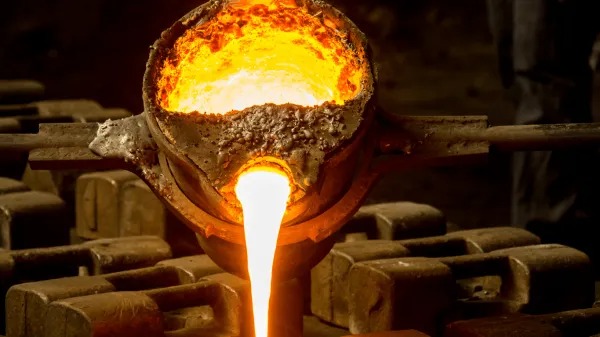
When it comes to manufacturing precision components, casting remains one of the most reliable techniques. Over centuries, casting has evolved from simple sand molds to advanced processes capable of delivering extremely fine details and high durability. Among these, Investment Casting Service has gained special attention due to its ability to produce complex shapes with excellent surface finish and dimensional accuracy.
But what makes investment casting different from other casting methods? To answer this, it’s important to explore how it compares with traditional techniques such as sand casting, die casting, and shell molding. Each has its own advantages, yet investment casting offers unique qualities that often make it the preferred choice for industries requiring precision and reliability.
What Is Investment Casting:
Investment casting, also known as the “lost-wax process,” involves creating a wax pattern of the part, coating it with ceramic, and then heating it so the wax melts away, leaving a hollow ceramic shell. Molten metal is then poured into this shell to form the final part.
This process is ideal for producing intricate designs, thin walls, and components where surface quality is essential. Unlike many other casting methods, investment casting minimizes the need for additional machining, saving both time and cost.
Key Differences Between Investment Casting and Other Casting Methods:
1. Investment Casting vs. Sand Casting:
Sand casting is one of the oldest and most widely used casting methods. It involves pouring molten metal into a sand mold. While sand casting is cost-effective for large parts, it cannot match the precision and surface quality of investment casting.
- Sand Casting Benefits: Suitable for very large parts, relatively inexpensive, flexible in design.
- Limitations: Rough surface finish, less dimensional accuracy, higher machining requirements.
- Investment Casting Edge: Produces smoother finishes, tighter tolerances, and can replicate complex geometries without extensive post-processing.
2. Investment Casting vs. Die Casting:
Die casting uses high-pressure injection of molten metal into steel molds, making it efficient for high-volume production. It is typically used with non-ferrous metals like aluminum, magnesium, and zinc.
- Die Casting Benefits: High production rate, consistent quality for large quantities, excellent for lightweight alloys.
- Limitations: High tooling cost, limited to lower melting point metals, not ideal for very intricate designs.
- Investment Casting Edge: Can handle a wide range of metals including steel, titanium, and superalloys. It also accommodates more complex shapes without costly tooling.
3. Investment Casting vs. Shell Molding:
Shell molding, similar to sand casting, uses a resin-coated sand that forms a thin shell around the pattern. It provides better surface quality than standard sand casting but still doesn’t achieve the precision of investment casting.
- Shell Molding Benefits: Better accuracy than sand casting, suitable for medium-sized components.
- Limitations: Limited design complexity, surface finish not as refined.
- Investment Casting Edge: Superior in producing intricate, thin-walled designs and achieving a near-net shape product.
Industries That Prefer Investment Casting:
Due to its accuracy and ability to work with difficult alloys, investment casting is widely used in:
- Aerospace: Turbine blades, engine components requiring heat resistance.
- Automotive: Precision gears, turbocharger wheels, and performance parts.
- Medical: Surgical tools, orthopedic implants, and dental components.
- Energy: Components for power plants, valves, and pumps.
- Defense: Complex weapon and missile parts requiring absolute precision.
These industries rely on investment casting not just for accuracy, but also for the efficiency it brings to manufacturing. By minimizing secondary machining and material waste, the process proves cost-effective in the long run despite higher upfront expenses.
Why moldpartner.com Is Leading the Way:
While many companies provide casting solutions, moldpartner.com stands out by offering advanced investment casting capabilities tailored to modern industry needs. Their expertise ensures that clients receive parts with impeccable accuracy, superior strength, and flawless finish. Whether it’s small production runs or large-scale industrial requirements, moldpartner.com delivers solutions that align with global quality standards.
By combining cutting-edge technology with years of experience, they have established themselves as a reliable partner for industries seeking high-performance casting services.
Advantages of Investment Casting Over Other Methods:
- Precision and Accuracy: Delivers tolerances up to ±0.1 mm, making it superior for complex designs.
- Surface Finish: Produces smooth surfaces that reduce or eliminate additional machining.
- Material Flexibility: Works with a wide range of alloys including stainless steel, aluminum, and titanium.
- Design Versatility: Enables production of parts with internal passages, thin walls, and intricate geometries.
- Cost-Effectiveness: Reduces material waste and machining time, making it efficient for both small and medium batch sizes.
Final Thoughts:
While traditional methods like sand casting, die casting, and shell molding continue to play crucial roles in manufacturing, investment casting clearly stands apart when precision, complexity, and superior finish are required. It is not merely a casting method but a solution that bridges efficiency with innovation.
For businesses seeking long-term reliability and consistent quality, choosing investment casting is a forward-looking decision. With experienced providers like moldpartner.com leading the way, industries worldwide can continue to push the boundaries of design and engineering with confidence.
